June 29, 2026
International Pet Transport During Summer
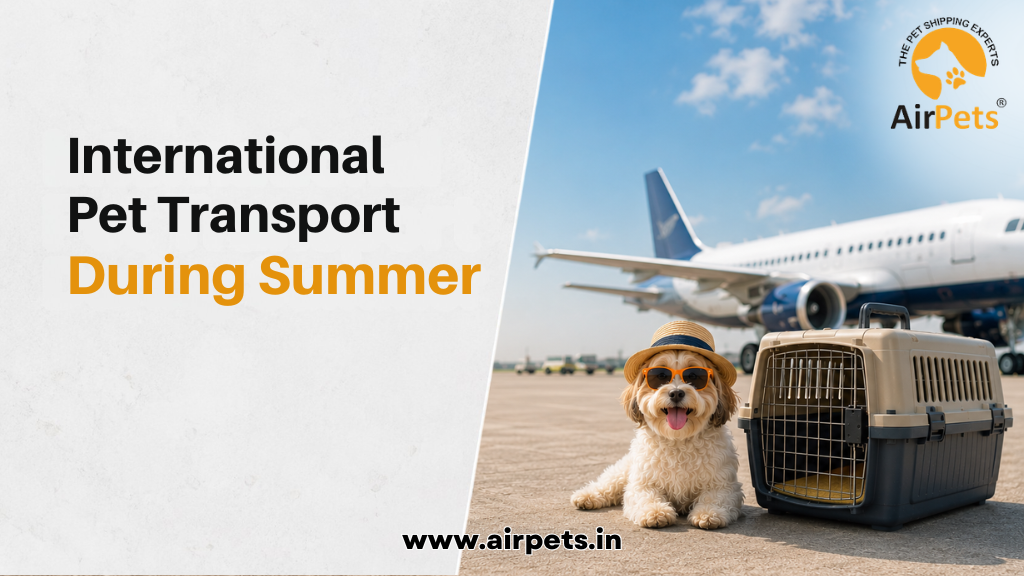
The summer season is one of the busiest seasons for international travel. Schools close for holidays, families relocate for new jobs, students move overseas, and many expatriates begin planning their next chapter.
The summer season is one of the busiest seasons for international travel. Schools close for holidays, families relocate for new jobs, students move overseas, and many expatriates begin planning their next chapter. Along with passports, visas, and flight tickets, another family member also organizes for the journey for loving pets.
Many first-time pet owners are surprised to learn that traveling abroad with pets during the summer requires a different kind of preparation. High temperatures, airline regulations, long waits at the airport, and seasonal travel demands all influence the travel planning process.
We at AirPets India, receive phone calls like every year.
- We've booked our flights for next week. Can our Labrador travel with us?
- The airline says there are temperature restrictions. What does that mean?
- Can my cat fly safely during the summer?
These concerns are valid. The good news is that dogs and cats travel internationally every day, even during the hottest months of the year. The real difference lies not in luck, but in planning.
If you are planning to take your pet abroad during the summer, it is important to know a few things before finalizing your travel dates.
Summer Requires Far More Planning Than Most People Expect
Most people think the flight itself is the biggest challenge.
In reality, planning often takes more time than the journey.
During summer, airlines may introduce additional precautions for transporting live animals. Some airports experience higher temperatures on the tarmac, while busy travel periods can make flight availability more limited.
This doesn't mean pets cannot travel.
It simply means owners should begin planning earlier than they might during cooler months.
Why Does Summer Affect International Pet Transport?
Unlike passengers, pets cannot explain when they feel uncomfortable.
Heat, humidity, long waiting periods, and unfamiliar surroundings can increase stress during travel if proper preparations are not made.
Several factors make summer travel different:
- Higher daytime temperatures
- Increased passenger traffic
- Longer airport handling times
- Airline heat restrictions on selected routes
- Weather-related schedule changes
Fortunately, most of these challenges can be managed with early planning.
Start with Your Destination, Not Your Flight
One mistake many owners make is booking flights before checking their destination country's pet import requirements.
Knowing destination requirements first saves both time and unnecessary stress later.
How Early Should You Begin Planning?
Planning timelines vary depending on where your pet is travelling.
Recommended Planning Timeline
|
Destination |
Suggested Planning Time |
|
UAE |
3–4 Weeks |
|
Qatar |
3–4 Weeks |
|
Singapore |
4–6 Weeks |
|
USA |
4–8 Weeks |
|
Canada |
4–8 Weeks |
|
United Kingdom |
6–8 Weeks |
|
Germany |
6–8 Weeks |
|
Australia |
4–6 Months |
|
New Zealand |
4–6 Months |
Starting early gives owners ample time to complete the treatment process for their animals, obtain necessary permits, and select the right flight.
Check Airline Policies Before Booking Tickets
Airlines don't all follow identical procedures for transporting pets.
Some have seasonal heat restrictions.
Others may limit pet transport during specific hours of the day or through particular transit airports.
This is why booking the cheapest available flight isn't always the best option.
You may ask questions like:
- Does the airline transport pets during summer?
- Are there temperature restrictions?
- Is a direct flight available?
- How long is the transit?
- Are there breed-specific policies?
These questions may influence your travel plans more than ticket prices.
Airline Restrictions Related to Heat
This is one of the most searched questions every summer.
Some airlines temporarily restrict live animal transport when temperatures at departure, transit, or arrival airports exceed their safety limits.
The purpose isn't to make travel difficult.
It's to reduce the risk of heat-related stress while pets are being handled on the ground.
Different airlines apply different policies, which is why checking directly with the airline or your relocation provider before booking is important.
Travel Early in the Day Whenever Possible
If you have ever walked outside at 2:00 PM during an Indian summer, you already know why this matters.
Early morning flights are often preferred for pet travel because temperatures are generally lower.
Late evening departures may also be suitable depending on the destination and airline schedule.
Choosing cooler travel times may reduce exposure to extreme heat during airport handling procedures.
Prepare the Travel Crate Well Before Departure
The travel crate isn't simply a transport box.
For your pet, it becomes a temporary room during the journey.
Introducing the crate only a day before departure rarely works well.
Instead, allow your dog or cat to spend time inside the crate several weeks before travel.
Leave familiar bedding inside.
Encourage short periods of rest.
Offer treats.
Allow the crate to become a familiar space rather than something new introduced on travel day.
Keep Your Loving Pet Hydrated
Hydration becomes especially important during summer travel.
Pets should have access to fresh water before departure, and airlines generally require suitable water containers to be attached to approved travel crates.
Avoid making sudden changes to your pet's feeding schedule immediately before travel.
Most veterinarians recommend following your regular routine unless specific travel advice has been provided.
Government Guidance Before Export
Before an international journey, pet owners exporting dogs or cats from India are generally required to complete veterinary examination and documentation procedures through the appropriate authorities.
Government Requirements at a Glance
|
Requirement |
Guidance |
|
Veterinary Examination |
Required before export certification |
|
Export Health Certificate |
Generally valid for 10 days from the date of issue |
|
Documentation |
Submit required documents and present the pet before export, usually around 7 days before departure with prior appointment |
These timelines are important because completing documentation too early may require repeat procedures before travel.
Transporting Pets During the Summer Season is Becoming Increasingly
As more professionals relocate internationally and families choose to move with their pets, summer has become one of the busiest periods for international pet transport.
Pets are no longer viewed as companions that stay behind.
They travel with the family.
That shift is reflected across many countries where pet ownership continues to grow.
According to the American Pet Products Association (APPA), approximately 66% of U.S. households owned a pet during 2023–2024. Similar trends are being observed globally as more families include pets in long-term relocation plans.
The result is simple.
International pet transport is no longer unusual.
It has become an expected part of global mobility.
Pet Owners Often Make These Mistakes During Summer
Ask any experienced pet relocation professional and they'll probably tell you the same thing.
Most delays don't happen because airlines refuse pets.
They happen because planning starts too late.
Every summer, owners rush to arrange pet travel after booking their own flights. By then, airline availability may be limited, veterinary appointments become difficult to schedule, and destination-country documentation may still be incomplete.
Here are some of the most common mistakes.
- Booking flights before checking pet import requirements.
- Waiting until the final week to arrange veterinary certificates.
- Purchasing the wrong size travel crate.
- Ignoring airline temperature restrictions.
- Forgetting to check transit airport weather.
- Assuming every country follows the same pet import process.
Most of these situations can be avoided with early preparation.
Things to Pack for Your Furry Friends
Packing for a pet isn't very different from packing for yourself.
You simply focus on different essentials.
A simple checklist includes:
- Original vaccination records
- Microchip details
- Veterinary health certificate
- Import permit (if applicable)
- Airline documents
- Leash or harness
- Familiar blanket
- Small quantity of regular food
- Water bowl approved for travel crates
- Recent photographs of your pet
Keeping digital copies of important documents is also a good idea.
Recognising Signs of Heat Stress
Although airline procedures are designed to minimise risk, pet owner should know the early signs of overheating.
Possible warning signs include:
- Heavy panting
- Excessive drooling
- Weakness
- Restlessness
- Bright red gums
- Difficulty breathing
If these signs appear before travel, veterinary advice should be sought immediately.
Fortunately, these situations are uncommon when travel is planned properly.
Choosing the Right Route Can Make a Difference
Experienced pet owners often compare travel routes.
A slightly more expensive direct flight may actually reduce overall travel time and minimise airport transfers.
Long transit periods during summer can increase stress for pets, particularly if temperatures are high.
Summer Challenges and Practical Solutions
|
Challenge |
Practical Solution |
|
High daytime temperatures |
Prefer morning or evening departures |
|
Airline heat restrictions |
Check airline policies before booking |
|
Flight delays |
Carry extra copies of documents and keep emergency contact details handy |
|
Long transit times |
Choose direct flights where possible |
|
Busy travel season |
Book flights several weeks in advance |
|
Travel stress |
Introduce the crate early and maintain a familiar routine |
Source: IATA Live Animals Regulations (LAR), airline pet travel guidance, veterinary travel recommendations.
International Pet Travel During Summer
|
Topic |
Information |
|
Export health certificate |
Generally valid for 10 days from the date of issue |
|
Veterinary examination |
Required before export certification |
|
Summer travel |
Morning and evening departures are often preferred during hotter months |
|
Travel crate |
Should comply with airline and IATA requirements |
|
Planning |
Many international relocations begin several weeks or months before travel |
Source: Animal Quarantine & Certification Services (AQCS), Government of India, IATA Live Animals Regulations.
Is Summer a Bad Time to Relocate a Pet?
No, thousands of dogs and cats travel internationally during summer every year.
Successful relocations usually have one thing in common - Preparation.
Owners who start planning early generally have more airline choices, better appointment availability, and enough time to complete documentation without rushing.
Professional Assistance from AirPets Relocation Services Pvt. Ltd. (AirPets India)
For pet owners looking for professional assistance, AirPets Relocation Services Pvt. Ltd. has been helping families relocate dogs and cats internationally since 2006. We assist with airline coordination, AQCS documentation, travel crate guidance, import and export procedures, airport clearance, and pet transport to destinations across the USA, UK, Canada, Australia, Europe, the Middle East, Asia, and many other countries.
Summary
Summer doesn't have to stop your pet animal from travelling internationally.
It asks for better planning.
- Start early.
- Speak with your veterinarian.
- Check airline policies before booking.
- Check your destination country's requirements.
- Help your pet become comfortable with the travel crate.
Then let the journey happen.
Often, that is the very moment when every checklist, document, and early-morning appointment feels meaningful.
Also read: International Pet Relocation, Domestic Pet Transport, How to Reduce Pet Anxiety During Travel, How to Handle Airport Transfers When Flying with Pets, Relocating Pets to India
Related Articles