July 21, 2026
What Happens After Your Pet Lands at the Destination Airport?
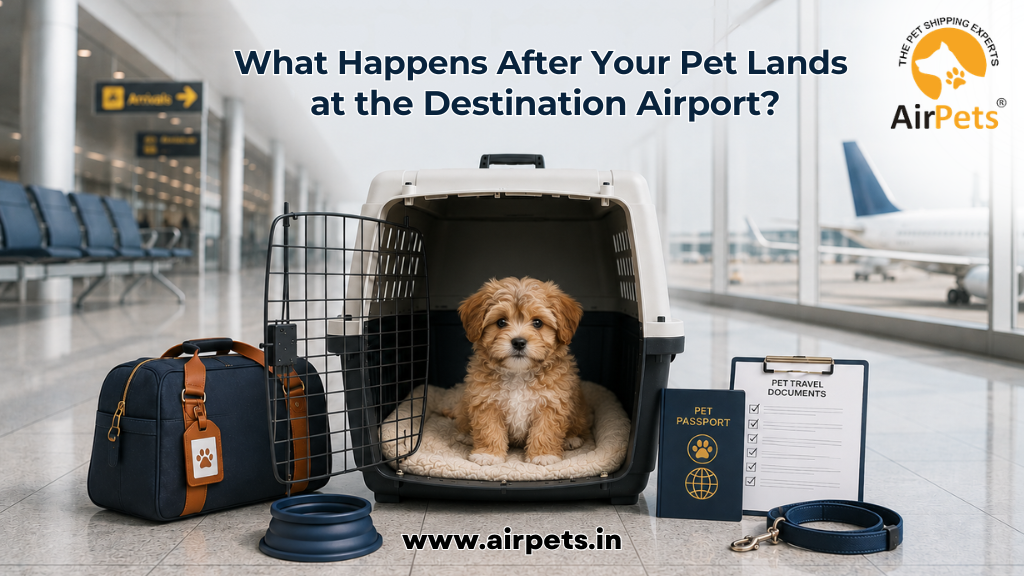
Moving overseas with a pet doesn't end when the plane touches down. For many pet owners, the longest part of the journey begins after landing. Questions start running through their minds.
Moving overseas with a pet doesn't end when the plane touches down.
For many pet owners, the longest part of the journey begins after landing. Questions start running through their minds.
- Has my pet arrived safely?
- Who is looking after them now?
- How long before we can meet again?
These are common concerns, particularly for families who are moving with a dog or cat for the first time.
The good thing is that pets don’t just arrive and wait on their own. there is a process in place from the moment the aircraft arrives at the destination airport. Knowing what is coming can make the experience much less stressful.
Landing Is Only One Part of the Journey
After landing, pets are not taken directly to the passenger terminal.
Well-trained ground handling staff unload them carefully and take them to a special area for live animals. Their travel crate is inspected for any obvious damage and the pet is confirmed to have travelled safely by staff.
Depending on the airport and local regulations, pets may be moved into a climate-controlled holding area while the next formalities begin.
This step is designed to protect the animal and prepare it for customs or veterinary inspection.
Documents Are Checked Again
One of the first tasks after arrival is document verification.
Authorities may review documents such as:
- Veterinary Health Certificate
- Import permit, where required
- Vaccination records
- Microchip details
- Any additional certificates that the destination country requests must be provided.
These checks help confirm that the pet meets local import requirements.
If everything is complete, the process usually moves ahead without unnecessary delays.
Veterinary Inspection May Take Place
Many countries require an inspection by an official veterinarian or quarantine officer after arrival.
This inspection is usually straightforward.
The officer may:
- Verify the pet's identity through the microchip.
- Assess the overall condition of the animal.
- Review health records
- Confirm that import conditions have been met
Most healthy pets complete this stage without difficulty.
Customs Clearance Is Part of the Process
Just like luggage and imported goods, pets also need customs clearance in many countries.
The clearance procedure varies from one destination to another, but it generally confirms that all legal import requirements have been followed.
Pet owners are often surprised that customs procedures can take longer than the flight itself.
This delay is completely normal and doesn't mean anything has gone wrong.
Your Pet May Spend Some Time in a Holding Facility
This situation is one of the biggest worries for pet owners.
Many imagine their dog or cat sitting alone for hours.
In reality, live animal holding facilities are designed to provide a safe place while paperwork is completed.
Airport staff monitor pets, and depending on the airport's procedures, water may be provided if needed.
The length of the wait depends on several factors, including:
- Airport workload
- Veterinary inspection schedules
- Customs processing
- Completion of documentation
Every airport operates differently.
When Can You Collect Your Pet?
Collection procedures vary between countries.
In some destinations, owners collect their pets directly from a designated animal facility.
In others, a customs broker or relocation specialist completes the formalities before arranging release.
Pet owners are normally informed about where and when collection will take place.
Identification and any necessary paperwork can help avoid unnecessary delays.
What If There Is a Delay?
Not every delay is a problem.
Sometimes flights arrive outside normal inspection hours.
At other times, customs officers may be processing several live animal shipments.
Further checking of documents can also lead to delays.
Waiting is frustrating, but rushing those checks is not in anyone’s best interest. The procedures are there to protect both the animals entering the country and local animal health.
Helping Your Pet After Collection
The journey may be over, but your pet still needs time to adjust.
Many dogs and cats After travelling, many dogs and cats feel exhausted. after travelling.
Some may drink a lot of water.
Others may simply want a quiet place to rest.
Allow your pet time to adjust before exposing them to new people, busy places or long walks.
Keeping familiar bedding, toys, and feeding routines often helps them feel comfortable more quickly.
A Smooth Arrival Starts Before Departure
Most arrival issues stem from events that occurred prior to the flight.
- Missing paperwork.
- Incorrect vaccination dates.
- An unsuitable travel crate.
- Last minute planning.
Proper preparation prior to departure makes for a much smoother arrival process for both pets and their owners.
Professional Assistance in Taking Pets Overseas
International relocation of pets doesn’t end when the flight lands.
We at AirPets Relocation Services Pvt. Ltd., help pet owners get ready for every step of the journey, including the arrival process. From reviewing travel documents before departure to working with destination requirements, advance planning can help reduce unexpected delays and give families a better understanding of what to expect when their pet arrives at its new home.
Summary
The moment your pet lands is exciting, but it's only one step in a carefully managed journey.
Learning what to expect upon arrival can turn uncertainty into confidence. All the steps – document check, vet inspections, customs clearance and final collection – are important in assisting pets to get safely into their new country.
If you are a family relocating abroad with your pets, knowing the arrival process is just as important as preparing for the flight itself.
Related Articles